Relocating to the Florida Panhandle · A guide by Ruth Rivera
Living in the Florida Panhandle.
The honest, sourced guide.
After more than 30 years in Florida real estate, fewer places surprise newcomers as
much as the Panhandle. Here is my honest answer in one line: the Florida Panhandle is
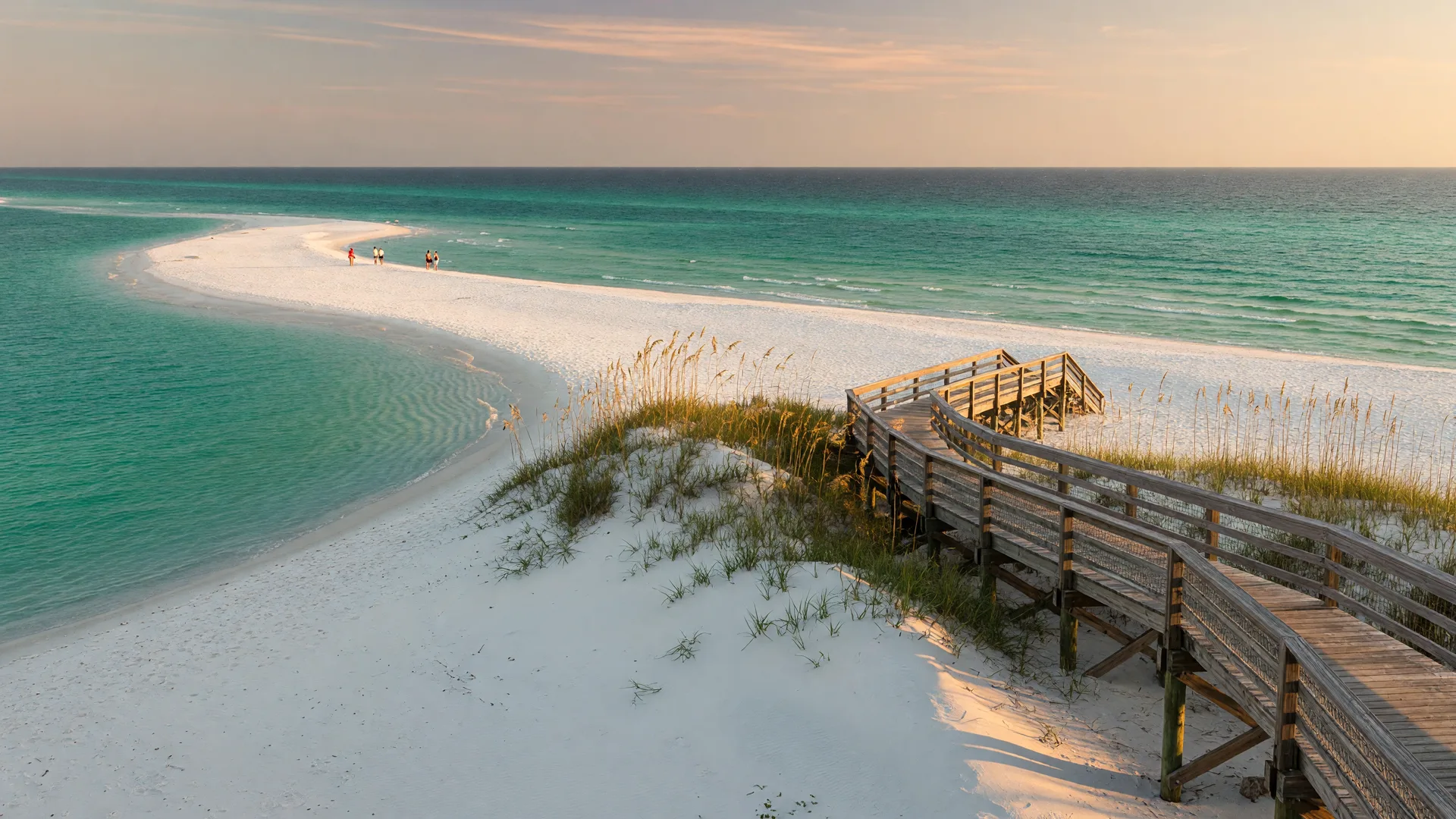
the state's sugar-white beach coast, a string of relaxed beach towns and military
communities where the cost of living runs lower, the commute stays short, and the
pace of life asks you to slow down and stay.
This guide is built for relocators, and because the Panhandle is a region, not one
city, I cover its three main hubs: Pensacola, the Destin-Fort Walton Beach coast, and
Panama City. I walk you through the housing market with dated, sourced numbers for
each hub, what to know about schools, the areas people actually choose, real commute
times, and an honest read on the cost of living. Nothing here is invented or
guesswork: where public sources disagree, I show the range and say so. And when you
are ready to look at homes, I would love to help you find the right one.
Because the Panhandle is a region, these are the numbers for its three main hubs. The
main table covers the Pensacola metro (Escambia and Santa Rosa counties), and a second
table covers the Destin-Fort Walton Beach coast (Okaloosa and Walton) and Panama City
(Bay County). Every figure comes from the named public source, with its date, verified
together on October 2, 2026.
Measure
Pensacola metro figure
Source and date
Median home price
$365,000 (list)
Median listing price, Pensacola-Ferry Pass-Brent MSA, Realtor.com data via FRED,
July 2026 (Escambia County median sale: $325,000, Redfin, 3 months ending June 2026)
Price per square foot
$179
Escambia County median, Redfin, 3 months ending June 2026 (no official metro-wide
figure published)
Median days on market
≈ 56 days
City of Pensacola, Redfin, 2026; metro days on market fell 8.2% year over year
(Realtor.com via FRED, August 2026)
Median rent (all apartments)
$1,309
Apartment List Pensacola Rent Report, July 2026 (October 2026 reading: $1,324)
Year-over-year price change
+10.7%
Escambia County median sale, Redfin, 3 months ending June 2026 vs. 2025 (city of
Pensacola: +3.2%)
Active inventory
≈ 3,200 homes
Gibbons Realty Pensacola market report, June 2026 (no single official metro-wide
count published; treat as directional)
Source notes: Realtor.com median listing price via FRED series MEDLISPRI37860, July 2026
(fred.stlouisfed.org); Redfin Escambia County and Pensacola housing market pages, 2026;
Apartment List Pensacola Rent Report, July and October 2026; Gibbons Realty Pensacola
market trends, June 2026. No official metro figure exists for price per square foot or a
single government inventory count, so those rows show the best published source and say
so. All figures verified October 2, 2026.
Market
Median home price
Source and date
Destin-Fort Walton Beach (Okaloosa/Walton)
$450,000
Crestview-Fort Walton Beach-Destin metro median sale, Florida Realtors data via
Palm Beach Post, June 2026 (+7.1% year over year). Fort Walton Beach city median:
$390,000, roughly 73 days on market (Movoto, July 2026). Median rent: $1,870
(Zumper, May 2026). No official metro price-per-square-foot or inventory figure is
published, so none is shown here.
Panama City (Bay County)
$356,000
Bay County median sale, Redfin, 3 months ending May 2026 (+0.8% year over year,
about $221 per square foot, roughly 76 days on market). Panama City Beach median:
$384,000, down 4.1% year over year (Redfin, same window). Median rent: $1,255
(Apartment List, September 2026).
Source notes: Florida Realtors metro data as reported by the Palm Beach Post, July 2026;
Movoto Fort Walton Beach market trends, July 2026; Zumper Fort Walton Beach rent
research, May 2026; Redfin Bay County, Panama City, and Panama City Beach pages, 2026;
Apartment List Panama City Rent Report, September 2026. Figures vary by source and
definition, and no year-end 2026 figures exist yet; these are the latest published 2026
readings, verified October 2, 2026.
What this means for buyers: the Panhandle is
one of Florida's most balanced places to buy. Prices sit well below the state's coastal
metros, demand is steady around the military bases, and more inventory gives you time to
compare areas. For sellers, fair pricing backed by current data still moves homes, and in
the resort towns, the season is your friend.
Schools
Schools: what buyers need to know.
The Panhandle is served by one public district per county, and which county you buy in
decides the system. Escambia County Public Schools serves Pensacola with roughly
37,000 students across about 70 schools; Santa Rosa County District Schools (Gulf
Breeze and the east-side suburbs) have about 30,000 students across 42 schools;
Okaloosa County School District (Fort Walton Beach, Destin, Niceville) has about
32,000 students across 50 schools; and Bay District Schools (Panama City and the
beach) has about 27,500 students across 49 schools (U.S. News and NCES, 2025-26).
For military families, moving between districts is a familiar rhythm, and each of
these systems is used to enrolling children whose families PCS in and out, often with
the school liaison offices at the bases as the first stop. Every county also runs
school choice options beyond the zoned school.
My honest rule, which I repeat on every tour: school assignments are address-specific,
and they can change as districts redraw boundaries or schools fill up. Two homes a few
streets apart can feed different schools, and a great school at one address does not
guarantee the same school next door. The assignment for the exact address is the only
number that matters.
Verify by address, every time
Before you make an offer, confirm the exact address with the right district:
Escambia County Public Schools (ecsd-fl.schoolloop.com), Santa Rosa County District
Schools (santarosa.k12.fl.us), Okaloosa County School District (okaloosaschools.com),
or Bay District Schools (bay.k12.fl.us). I keep this page to district facts on
purpose. Rankings and opinions about schools belong in a conversation about your
child and your family, not a guide for everyone, and I am happy to have that
conversation with you.
Areas
Eight places people choose.
There is no single best spot in the Panhandle, because the right fit depends on your
job, your commute, your budget, and the way you want to live. What I can do is describe
each area by its character, who it tends to suit, and what the drive feels like. I
describe areas by lifestyle on purpose: under the Fair Housing Act, every buyer has the
right to live in any of these communities, and I serve everyone with the same care, in
English or Spanish.
Pensacola & East Hill
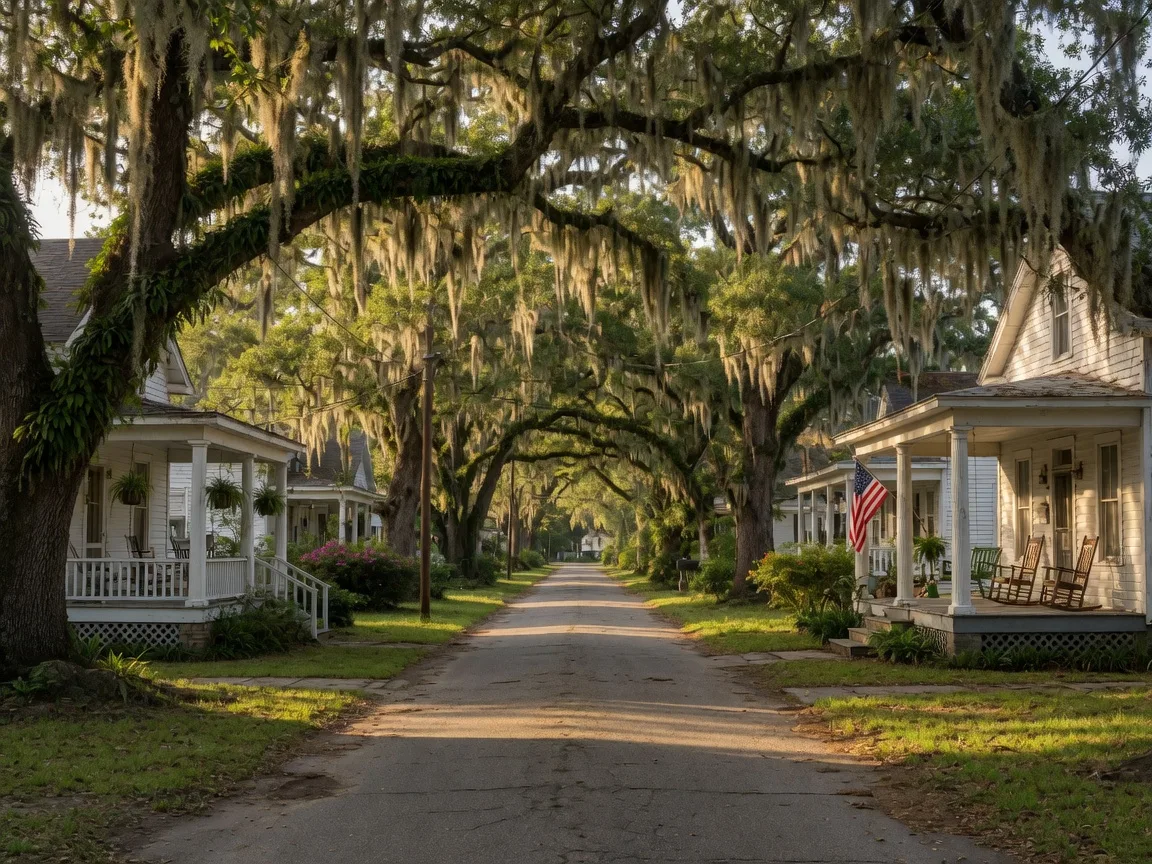
The region's urban anchor: a walkable downtown waterfront, museums, and festivals, with East Hill just above offering live-oak streets, front porches, and early-1900s homes. Pensacola has the biggest city calendar of the three hubs.
Good for: Families, professionals, and history lovers who want a real city with a neighborhood soul.
Downtown is often 5 to 15 minutes from most of the city, and NAS Pensacola runs about 15 to 25 minutes from the central neighborhoods.
Gulf Breeze
A family-focused suburb on the peninsula south of Pensacola, linked by the Three Mile Bridge and surrounded by protected bayside land. Steady, leafy, and close to both the base and the beach.
Good for: Families and workers heading to NAS Pensacola who want a quiet mainland suburb.
Downtown Pensacola is about 15 to 25 minutes across the bridges, and the beach a short drive past the causeway, busier on summer weekends.
Pensacola Beach
A barrier-island community known for its bright-white quartz sand and clear water, with the historic fort, a short town center, and a decided seaside rhythm. Homes range from classic beach cottages to newer builds.
Good for: Beach lovers, retirees, and second-home buyers who want sugar sand at the door.
Downtown Pensacola runs about 20 to 30 minutes over the bridge, with beach-season traffic adding time on summer weekends.
Destin
Destin anchors the Emerald Coast: the HarborWalk marina, world-class fishing, dining on the water, and beach neighborhoods along Highway 98. It is the region's premium address, with prices to match.
Good for: Luxury buyers, families, and retirees drawn to the Emerald Coast's marquee resort town.
US-98 is the main spine: Fort Walton Beach and the Okaloosa base corridor run about 20 to 30 minutes, busier in tourist season.
Fort Walton Beach
An older, established coastal city on Choctawhatchee Bay with beaches, the boardwalk, and a lived-in, family feel. It sits at the heart of the military employment corridor.
Good for: Military families, workers at Eglin and Hurlburt, and practical buyers who want the coast at a more moderate price.
Eglin Air Force Base and Hurlburt Field are typically 10 to 20 minutes from most of the city, and Destin about 15 to 25.
Niceville
A growing community on the north shore of Choctawhatchee Bay, minutes from Eglin's back gate, with parks, a boating culture, and a tighter-knit feel than the beach towns. Steady demand keeps it family-flavored.
Good for: Military families and commuters to Eglin who want a bayside small town.
Eglin is often 10 to 15 minutes, Fort Walton Beach about 15 via the Mid-Bay Bridge, and Destin about 20 to 30.
Santa Rosa Beach & the 30A corridor
The coastal corridor east of Destin: sugar-white sand, bicycle paths, and a long line of beach neighborhoods, new and old, along Highway 30A. It is a lifestyle choice as much as a location.
Good for: Families, remote workers, and retirees who want beach-town living with a quieter, community pace.
US-98 carries you to Destin and Fort Walton in 25 to 40 minutes depending on season and traffic; Highway 331 links north to I-10.
Panama City & Panama City Beach
The eastern hub pairs Panama City, a working bayfront city with schools, hospitals, and Tyndall Air Force Base nearby, with Panama City Beach, a full resort strip of sand, dining, and vacation energy. Together they cover most lifestyles.
Good for: Families, retirees, and Tyndall-area workers who want bay city life plus a resort beach.
The Hathaway Bridge links the city and the beach, typically 15 to 20 minutes across; most in-town drives stay under 20 minutes.
A note on fit: these are everyday starting
points, not a complete list. The coast between these hubs holds dozens more communities,
from bayside hamlets to inland ranch country, and the right one for you may be a quieter
street I only find by listening to what you actually need.
Commute & connectivity
Getting around: the honest picture.
The Panhandle's commutes are short by Florida standards, and they mostly flow toward
three kinds of anchors: the downtowns, the bases, and the beaches. Here is the practical
map.
Downtown Pensacola
The region's largest urban employment core: federal and county offices, healthcare, and the waterfront districts. Workers live in East Hill, nearby neighborhoods, and Gulf Breeze across the bay, with most drives 5 to 25 minutes depending on the bridge traffic.
The military bases
NAS Pensacola employs more than 16,000 military and about 7,400 civilian personnel (U.S. Navy, 2026); Eglin Air Force Base, the largest Air Force base in the world by area, hosts roughly 10,000 military and 7,000 civilian personnel with an annual economic impact near $9.2 billion (OSD, 2026). Hurlburt Field heads Air Force Special Operations Command and supports more than 21,000 people total (AFSOC, FY17 statement), while Tyndall Air Force Base near Panama City keeps rebuilding after Hurricane Michael and is transitioning to an F-35A mission (Tyndall EIA, FY22).
Beach access corridors
Every beach town has its commuter moment: the Pensacola Bay Bridge to Pensacola Beach, US-98 through Destin and Fort Walton, and the Hathaway Bridge to Panama City Beach. Off-season drives are easy; summer weekends and snowbird season are not, so locals learn the alternates.
Panama City and the eastern corridor
Bay County's employment base centers on healthcare, education, hospitality, and Tyndall. The city and the beach are one metro rhythm: most work commutes stay under 20 minutes, and US-98 reaches west to the Walton County line in about half an hour.
I-10
The region's east-west backbone, running from Pensacola through Tallahassee and on to Jacksonville. It is the road for regional travel and freight, and it puts New Orleans and Jacksonville roughly three to five hours away.
US-98
The coastal spine linking Pensacola, Fort Walton Beach, Destin, Panama City, and beyond. It is the daily road for beach-town life, the most congested corridor in season, and the best road-biking route out of season.
US-90
The historic inland route through Pensacola and across the northern Panhandle. It is the calm alternate to I-10 for local east-west trips and the main street of Pensacola's historic districts.
Highway 331
The north-south bridge road from the Santa Rosa Beach and 30A corridor up to DeFuniak Springs and the I-10 junction. It is how coastal Walton County reaches the interstate and the airport at Destin.
Highway 30A
The scenic two-lane along Walton County's south shore, famous for its beach neighborhoods, state parks, and bike lanes. It is more destination than shortcut, and the back roads along it define the beach-town way of life.
Pensacola International Airport (PNS)
The busiest of the region's airports, minutes from downtown Pensacola with daily nonstop service across the country.
Destin-Fort Walton Beach Airport (VPS)
The Emerald Coast's convenient hub at Eglin Air Force Base, an easy shot from Destin, Fort Walton Beach, and Niceville.
Northwest Florida Beaches International Airport (ECP)
The newer airport serving Panama City and Panama City Beach, with direct flights to major hubs.
Ruth's rule of thumb: know your season.
From March through August, tourist traffic concentrates on the beach corridors, US-98
and the bridges, and the alternates, I-10, US-90, and the back roads, stay practical.
Base gates follow their own rhythms at shift changes, so a home inside the right commute,
often under 30 minutes, keeps your week calm.
Cost of living
What life actually costs: an honest portrait.
The Panhandle is one of Florida's more affordable corners. Pensacola runs roughly at
or slightly below the U.S. average cost of living, a couple of percent under per
PayScale and RentCafe, with some indexes a few points above (2026), and every hub
prices well below the state's southern metros. Here is the portrait without fake
precision, in the general terms and ranges that are actually true.
Housing
The region's strongest advantage. The sourced median price and rent figures are in the snapshots above, and every Panhandle market comes in well below the coastal metros of South Florida. Pensacola is the most affordable hub, Destin the premium end of the coast.
Taxes
Florida has no state personal income tax, a real difference on your take-home pay. Property taxes vary by county and city millage, and Florida's homestead exemption can lower the bill on a primary residence. Your exact number depends on the address.
Insurance
The state's biggest variable, and the Panhandle is not immune: premiums run above the national average, with coastal addresses quoting higher than inland ones. Every property quotes differently, so we always get real quotes before you make an offer.
Utilities and groceries
Air conditioning carries the summer, so utility bills run a little above the national average, while groceries track close to or slightly below it. Winters are mild enough that heating costs stay modest, which balances the yearly total.
The everyday Panhandle
Oak streets, front porches
“The point of this section is not a fake-precise number, because your
household is different from the next. When we talk about your budget, I walk you
through the real line items for the actual homes and ZIP codes you are
considering.”
Ruth Rivera · Your Fearless Real Estate Resource
Pros and cons
The honest pros, and the practical cons.
No place is right for everyone at every moment, and the Panhandle is no exception. Here
are the real strengths, and the things that ask a little planning, framed the practical
way I frame them for my own clients.
What the Panhandle does well
Housing that goes further
Every hub in the Panhandle prices well below South Florida, with Pensacola running roughly at or slightly under the U.S. average cost of living (PayScale and RentCafe, 2026). Your dollar buys more house and more land.
Sugar-white beaches on your doorstep
The quartz-sand coast from Pensacola Beach through Destin to Panama City Beach is the reason people fall in love with the region, and the beach is a weekend habit, not a vacation.
A military-friendly region
Four major installations anchor the economy and the community, so military families find employers, peers, and services that understand PCS life, with bases from NAS Pensacola to Tyndall covered.
A relaxed, honest pace
Less traffic, shorter commutes, and a friendlier rhythm than the big metros. Most commutes across the region stay under 30 minutes, which buys back hours of life every week.
A strong remote-work fit
The beach towns from 30A to PCB have become magnets for remote workers who want an office with a surf break, and the airports make travel days practical.
What to plan for
Hurricane season
A fact of Gulf Coast life, and one we plan for together. We check flood zones, roof age, and wind-mitigation features with every home, and the rest of the year the weather is among the most beautiful in the country.
Car-dependent daily life
A car is the practical starting point for the region, and beach-season traffic is real on the coast. Choosing a home near your job or base keeps the daily drive short, and the alternates, I-10, US-90, and the back roads, keep weekends calm.
Insurance and taxes vary by address
Florida premiums are among the nation's highest and coastal addresses quote higher. We get real insurance quotes and tax estimates before you make an offer, so the numbers never surprise you at closing.
Summer heat and humidity
Real, and manageable. Efficient air conditioning, insulated windows, and tours planned for cooler mornings make it easy; we check a home's AC age and efficiency on every visit.
Distance to big-city amenities
The Panhandle is its own world, and that is the point: the nearest big metros are hours away. The trade is a quieter, more self-contained life with regional airports that keep travel days easy.
Relocator FAQ
Questions people ask before they move.
These are the questions relocators actually type into Google and AI tools when they are
weighing a move to the Panhandle. Here are my direct answers, in my own voice, and every
one of them ends with the same open door.
Is the Florida Panhandle a good place to live?
For most relocators, yes, and the numbers back it up: the Pensacola metro alone is home to roughly 540,000 people, and the region keeps growing (U.S. Census, 2024). Sugar-white beaches, military-friendly communities, a lower cost of living than South Florida, and a relaxed pace make it an easy place to choose. In 30 years of Florida real estate, I have seen more relocators surprised by how quickly the Panhandle feels like home, and I would love to help you see it through the eyes of someone who lives here.
Is the Florida Panhandle affordable?
Generally, yes, and it is one of the region's biggest draws. Pensacola runs roughly at or a couple of percent below the U.S. average cost of living (PayScale and RentCafe, 2026), and every hub prices well below South Florida. Median apartment rents in 2026 ran about $1,309 in Pensacola, $1,870 in Fort Walton Beach, and $1,255 in Panama City (Apartment List and Zumper, 2026), and the sourced home prices are in the snapshot above. The honest caveats are insurance and seasonal demand at the beach, and I build a real budget with every relocator.
What is the best beach town in the Florida Panhandle?
There is no single best, only the best fit. Pensacola Beach is classic and family-easy with a real community; Destin is the resort town with dining and nightlife; the 30A corridor around Santa Rosa Beach is quieter and community-driven; and Panama City Beach is the big, energetic strip. If you want the beach with a working city behind it, Pensacola and Panama City give you both. Tell me how you want to use the coast and I will match you to the stretch.
How are the schools in the Florida Panhandle?
The Panhandle is served by county districts: Escambia (Pensacola) with roughly 37,000 students across about 70 schools, Santa Rosa with about 30,000 students across 42 schools, Okaloosa (Fort Walton Beach and Destin) with about 32,000 students across 50 schools, and Bay (Panama City) with about 27,500 students across 49 schools (U.S. News and NCES, 2025-26). The honest rule everywhere: assignments are address-specific and can change, so confirm the exact address with the district before you make an offer.
Is the Florida Panhandle good for military families?
It is one of the most military-friendly regions in the country. NAS Pensacola employs more than 16,000 military and about 7,400 civilian personnel, Eglin Air Force Base is the largest Air Force base in the world by area with roughly 17,000 military and civilian staff, Hurlburt Field heads Air Force Special Operations Command, and Tyndall Air Force Base anchors Bay County (U.S. Navy and OSD, 2026). Bases bring employers, schools, healthcare, and neighbors who all understand the PCS rhythm, and nearby towns from Gulf Breeze to Niceville have grown up around exactly that life.
What is the weather like in the Florida Panhandle?
Warm, humid subtropical, with gentle winters and long beach seasons. On official 1991-2020 normals, Pensacola's January highs average about 60 degrees with lows near 42, while July highs average about 90 with lows near 74; annual rainfall totals roughly 65 to 68 inches, most of it in summer afternoons (NOAA). Panama City runs nearly the same, with January highs near 63 and about 59 to 64 inches of rain a year. Fall and spring are spectacular, which is why the region earns its living on the coast.
Are there jobs in the Florida Panhandle?
Yes, and the base is broader than outsiders assume. Military and defense are the anchors, with defense-related activity across Northwest Florida supporting roughly 187,000 jobs and about 29% of the region's economy (regional military-impact reports, 2022). Healthcare, education, aviation, and hospitality add thousands of jobs, and the beach towns are increasingly popular with remote workers. The practical question is matching your field to the right hub, and I help relocators think through the drive before the house.
Is the Florida Panhandle good for retirees?
Yes, and it has been a retirement draw for generations. Mild winters, a relaxed pace, no state income tax, and housing that costs less than South Florida make the math friendly, and the beach towns from Pensacola Beach to the 30A corridor are built for long walks and slow mornings. Healthcare is solid in Pensacola and Panama City, and the smaller airports keep family visits easy. The main planning item is insurance at the coast, so we run real numbers early.
Do I need a car to live in the Florida Panhandle?
Yes, practically speaking. The region has no significant rail or transit network, and daily life, school runs, base access, and beaches all assume a car. The good news is that most commutes are short, often under 30 minutes, and the beach is a quick escape at the end of most weeks. Choosing a home near your job corridor is the single best move I recommend to every relocator.
Which Panhandle area should I choose?
Match the area to your anchor. Eglin and Hurlburt workers tend to settle in Fort Walton Beach or Niceville; NAS Pensacola folks often pick Gulf Breeze or Pensacola; Tyndall families usually land in Panama City or its western suburbs; and remote workers and retirees gravitate to Destin, 30A, or Panama City Beach. Tell me where your days start and what you want your weekends to look like, and I will narrow it to two or three areas worth touring first.
Equal professional service
A fair chance at home in the Panhandle, for everyone.
Ruth provides equal professional service to all clients, regardless of race, color,
religion, sex, disability, familial status, or national origin, and follows the
REALTOR® Code of Ethics and the Fair Housing Act. Every relocator gets the same
care, the same honesty, and the same protection, in English or Spanish.
Ready to find your Panhandle home?
Whether you are PCS-ing next month or exploring for next year, I would love to be your
guide. Start by searching homes, or send me a note and tell me about your move to
Pensacola, the Emerald Coast, or Panama City. I answer personally, in English or Spanish,
with no jargon and no obligation.