Relocating to Sarasota, Florida · A guide by Ruth Rivera
Living in Sarasota.
The honest, sourced guide.
After more than 30 years in Florida real estate, here is my honest answer to the
question I get more and more often: Sarasota is the Gulf Coast’s cultural
capital, where world-class beaches and a serious arts scene meet one of the country’s
most welcoming places to retire, and the everyday rhythm is shaped by water, warmth,
and a calendar full of culture.
This guide is built for relocators. I walk you through the current Sarasota County
housing market with dated, sourced numbers, what to know about schools, the
neighborhoods people actually choose, real commute times on the main corridors, and
an honest read on the cost of living. Nothing here is invented or guesswork: where
public sources disagree, I show the range and say so. And when you are ready to look
at homes, I would love to help you find the right one.
These are the numbers that matter when you compare Sarasota to where you live now. Every
figure comes from the named public source, with its date, verified together on October 1,
2026.
Measure
Sarasota figure
Source and date
Median home price (single-family)
$470,000
Realtor Association of Sarasota and Manatee (RASM), August 2026 market report;
combined Sarasota + Manatee metro median $485,000
Price per square foot
≈ $245 (county) to ≈ $274 (metro listing)
Redfin Sarasota County tracker, three months ending May 2026; FRED metro listing
median, January 2026. RASM publishes no single official metro figure
Median days on market
≈ 82 (metro)
FRED North Port-Sarasota-Bradenton MSA series, May 2026; RASM publishes monthly
time-to-contract figures in its report PDFs rather than a single county headline
Median rent (all apartments)
≈ $1,336
Apartment List Rent Report, October 2026 (Sarasota city, down 3.3% year over year).
Zumper’s all-types city median is $2,485 (September 2026), a different mix and method
Year-over-year price change
−1.1%
RASM, August 2026 vs. August 2025 (Sarasota County single-family median); the
combined metro median rose 2.2%
Active inventory
2,619 homes · 3.7 months of supply
RASM, August 2026 (single-family active listings, down 20.8% year over year)
Source notes: Realtor Association of Sarasota and Manatee (RASM), August 2026 market report,
released September 16, 2026, via myrasm.com and local real estate press; Redfin Sarasota
County housing market tracker, three months ending May 2026 ($245 median price per square
foot, down 2.0% year over year); Federal Reserve Bank of St. Louis (FRED),
North Port-Sarasota-Bradenton MSA housing series, 2026; Apartment List Rent Report, October
2026; Zumper Sarasota rent research, September 2026. RASM publishes no single official
metro-wide price-per-square-foot or median-days-on-market figure, so those rows show the
published tracker figures with their own dates rather than an invented number. All figures
verified together October 1, 2026.
What this means for buyers: with inventory
down sharply from last year and supply around 3.7 months, well-priced homes move, so
preparation matters: financing in order, insurance quoted early, and a list of the two or
three neighborhoods you would act on fast. For sellers, the leaner inventory is a genuine
advantage when the price and presentation are right.
Schools
Schools: what buyers need to know.
The school system serving the city and county is Sarasota County Schools, a midsize
district with the resources of a larger one: roughly 44,000 to 45,000 students across
about 57 to 65 school sites, depending on the count and date (the district’s own
materials, and the most recent NCES data for 2024-25). The district describes itself as
the 21st-largest in Florida by enrollment (NCES statistics), serving students from
downtown Sarasota to the eastern county communities.
Buyers who work or look just north of the county line sometimes consider Manatee County,
whose district serves about 52,000 to 54,000 students across roughly 82 schools
(district materials and U.S. News / NCES directory counts). This matters more than you
might think: master-planned Lakewood Ranch straddles the Sarasota and Manatee county
line, so a home on one side of a street can sit in a different district, with different
schools and different taxes, than the home next door.
My honest rule, which I repeat on every tour: school assignments are address-specific,
and they can change as districts redraw boundaries or schools fill up. Two homes a few
streets apart can feed different schools, and a great school at one address does not
guarantee the same school next door. Florida also gives families school choice options,
so your zoned school is not always your only option.
Verify by address, every time
Before you make an offer, confirm the exact address with the district directly:
Sarasota County Schools at sarasotacountyschools.net, or the School District of
Manatee County at manateeschools.net for addresses north of the line. I keep this
page to district facts on purpose. Rankings and opinions about schools belong in a
conversation about your child and your family, not a guide for everyone, and I am
happy to have that conversation with you.
Neighborhoods
Eight communities people choose.
There is no single best neighborhood in Sarasota, because the right fit depends on your
commute, your budget, and the way you want to live. What I can do is describe each area
by its character, who it tends to suit, and what the drive feels like. I describe areas
by lifestyle on purpose: under the Fair Housing Act, every buyer has the right to live in
any of these communities, and I serve everyone with the same care, in English or Spanish.
Downtown Sarasota
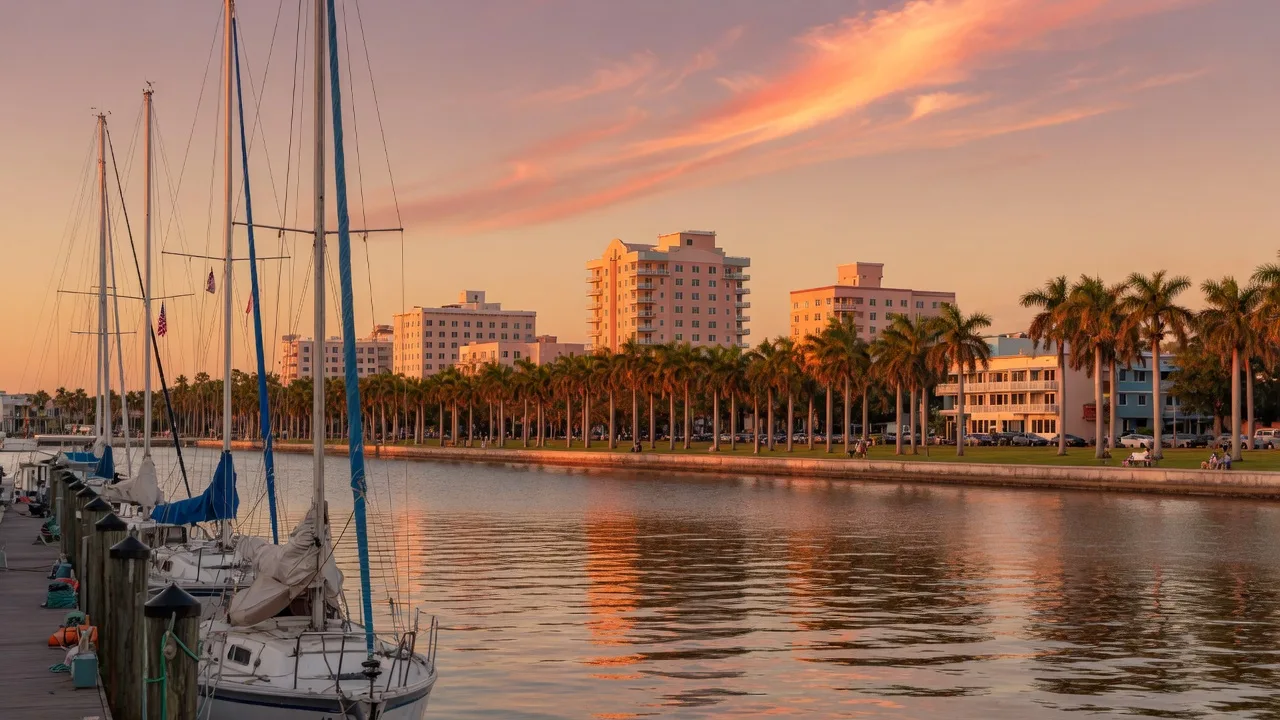
The walkable heart of the city, wrapped around Five Points Park and the bayfront: the Sarasota Opera, the Asolo Repertory Theatre, Florida Studio Theatre, galleries, restaurants, and the marina all within strolling distance. Condos and townhomes above the street life give it a city feel that is unique on this stretch of the Gulf coast.
Good for: Professionals, empty nesters, and culture lovers who want to live in the middle of the city's arts scene.
Beaches are the surprise perk: Siesta Key is usually about 10 to 15 minutes by car, and I-75 runs about 15 minutes east via Fruitville Road.
Siesta Key
A barrier island famous for the fine, white quartz sand of Siesta Beach, with a compact village of shops and restaurants at its midpoint. Homes range from older beach cottages to modern waterfront properties, and the mix of full-time and seasonal residents keeps a relaxed, resort feel all year.
Good for: Beach lovers, part-time residents, and families who want the island life with a walkable village at its center.
Downtown Sarasota is about 10 to 15 minutes across the causeway, the UTC and hospital corridor runs 20 to 30 minutes, and the access bridges narrow at peak season, so we plan beach runs around the calendar.
Lido Key
A quieter barrier island just south of downtown, home to Lido Beach and the tree-lined boutiques and restaurants of St. Armands Circle. Its mix of condominiums, townhomes, and waterfront residences makes it a favorite for those who want sand and sunsets without the crowds of the busier strips.
Good for: Beach and boating households, empty nesters, and anyone who wants the beach lifestyle steps from St. Armands Circle.
St. Armands Circle is walkable from many Lido homes, downtown Sarasota is about 10 to 15 minutes, and the beach is as close as your own street.
Lakewood Ranch
One of the largest master-planned communities in the region, built around villages with their own pools, parks, and shops, plus a growing office and medical corridor of its own. It straddles the Sarasota and Manatee county line, so which school district, county services, and taxes a home falls under depends on the exact address, something we always verify together.
Good for: Families and relocating professionals who want a master-planned lifestyle with parks, town centers, and new construction.
The UTC and University Parkway corridor is close, often 10 to 20 minutes, downtown Sarasota runs 25 to 35 minutes via I-75, and SRQ airport about 25 to 35 minutes.
Palmer Ranch
A large master-planned area along Clark Road with dozens of villages, golf courses, lakes, and miles of trails, plus a long list of amenity-rich neighborhoods. Its mix of maintenance-free villas and larger single-family homes makes it popular with empty nesters simplifying their lives and families moving up at the same time.
Good for: Active adults and families who want green space, golf, and a wide range of home styles south of downtown.
Siesta Key is often about 10 to 15 minutes, downtown Sarasota 20 to 25 minutes, and I-75 about 10 to 15 minutes via Clark Road.
Southside Village
A compact historic district south of downtown built around a restaurant row, with bungalows, courtyards, and a community feel that is hard to find on this coast. Sidewalks, neighborhood cafes, and weekend markets make daily errands feel more like a stroll than a trip.
Good for: Professionals and families who want a genuine walkable village with restaurants and parks on the doorstep.
Downtown is about 5 to 10 minutes, Siesta Key about 15 minutes, and I-75 about 15 minutes via Bee Ridge Road.
Gulf Gate
An established mid-county neighborhood wrapped around Gulf Gate Village, a pocket of local restaurants, shops, and taverns along Gulf Gate Drive. Mostly older ranch-style homes on quiet streets, with a steady supply of more attainable price points than the beach-adjacent areas.
Good for: Families and first-time buyers who want a residential base with its own little business district at a friendlier price point.
Siesta Key is about 15 to 20 minutes, downtown Sarasota about 20 minutes, and I-75 about 10 to 15 minutes via Clark Road.
University Park
A well-established residential area in north Sarasota between University Parkway and the bayfront, close to the medical offices and shops of the Tamiami Trail corridor and a short drive to the Mall at University Town Center. Wide streets, mature trees, and a practical everyday mix of older and newer homes.
Good for: Professionals, families, and hospital and retail workers who want convenience to the region's biggest job corridor.
The UTC and University Parkway corridor is often 10 to 15 minutes, downtown Sarasota 15 to 20 minutes, and the hospital district only minutes away by car.
A note on fit: these are everyday starting
points, not a complete list. Sarasota County has dozens more communities worth a look, from
bird sanctuaries at the south end to ranch-country estates at the east, and the right one
for you may be a quieter street I only find by listening to what you actually need.
Commute & connectivity
Getting around: the honest picture.
The official average one-way commute in Sarasota County is about 24.5 minutes (U.S.
Census ACS, 2024). Your real number depends on which corridor you live near and which one
you drive, so here is the practical map.
Downtown Sarasota
The city's office, government, and cultural heart: banking and professional services, the courthouse, the arts venues, and the bayfront hospitality businesses. Homes in Southside Village and downtown keep this commute short, and workers on the hospital corridor balance city life with a quick ride to work.
The UTC and University Parkway corridor
University Town Center and the surrounding office and medical parks anchor the region's biggest business corridor outside downtown, served by University Parkway and I-75. Living in Lakewood Ranch, University Park, or the north-county communities puts most of this drive in the teens or better.
The beach and tourism corridor
Siesta Key, Lido Key, St. Armands Circle, and Longboat Key drive the tourism and hospitality economy, with resorts, restaurants, and boating in the same neighborhoods where people live. Seasonal traffic, peaking roughly January through April, is the main commute variable here, and living on the island or just at its doorstep keeps it short.
I-75
The metro's interstate spine, running north to Tampa in roughly an hour and south toward Fort Myers and Naples in about 1.5 to 2 hours. It is toll-free through the Sarasota stretch, and from most central neighborhoods the trip to the University Parkway exit runs about 15 to 25 minutes.
US-41 (Tamiami Trail)
The historic bayfront highway that built Sarasota: it runs the full length of the county through downtown, past the hospital district and the beach access roads. It is the practical surface-street alternative to I-75, slower at peak hours but often the fastest way between downtown and the barrier islands.
Fruitville Road (SR 780)
The main east-west connector between I-75 and downtown Sarasota, running to the bayfront. From the interstate to downtown usually takes about 15 to 20 minutes, and it is the route most east-side families use for city errands.
University Parkway (CR 192)
The east-west corridor across north Sarasota from I-75 to the bayfront, serving UTC, the office and medical parks, and access to the airport. Cross-town trips usually run 15 to 25 minutes, and it doubles as the main route north toward Lakewood Ranch.
Stickney Point Road and Clark Road (SR 72)
The southern east-west artery: Clark Road crosses the county from I-75 through Gulf Gate, and Stickney Point Road carries the last stretch out over the Stickney Point Bridge onto Siesta Key. From I-75 to the island usually runs about 20 to 30 minutes, with seasonal bridge traffic the biggest variable.
Ruth’s rule of thumb: there are no
toll roads inside Sarasota County and I-75 through Sarasota is toll-free, so a
transponder is optional unless you drive the Sunshine Skyway north toward Tampa. The
biggest time variable is the season: roughly January through April brings snowbirds and
visitors, so plan beach-bound runs outside peak hours and add 10 to 25 minutes to any
off-peak estimate on the island roads at those times.
Cost of living
What life actually costs: an honest portrait.
The most widely cited cost-of-living indexes put Sarasota roughly 4% to 8% above the
U.S. average (PayScale 5%, BestPlaces 5.3%, Salary.com 8%, 2026), driven mainly by
housing. Here is the portrait without fake precision, in the general terms and ranges
that are actually true.
Housing
The main driver, and the reason to check the snapshot above first. Widely cited indexes put Sarasota housing roughly 13% above the national average (PayScale, 2026; Redfin, 2026 lands about the same), high for Florida but well below the very top of the luxury coastal market.
Taxes
Florida has no state personal income tax, a real difference in your take-home pay. Property taxes vary by address: Sarasota County has 61 separate taxing authorities, and a typical combined homeowner millage runs roughly 13 to 15 mills, about 1.3% to 1.5% of taxable value, depending on where you live (Sarasota County Property Appraiser, 2025 Annual Report), with the homestead exemption lowering the bill on a primary residence.
Insurance
The state's biggest variable. Florida's average home insurance premiums are among the highest in the nation (Bankrate, 2025; Insurify, 2026), and Gulf-coast addresses can quote higher. Every property is different, so we get real insurance quotes before you make an offer, every time.
Utilities and groceries
Air conditioning is the workhorse of a Florida summer, so utility bills run a little above the average, and groceries edge slightly above as well (PayScale, 2026: utilities about 5% and groceries about 7% above the national average). The trade is a mild winter with almost no heating bills to speak of.
The everyday Sarasota
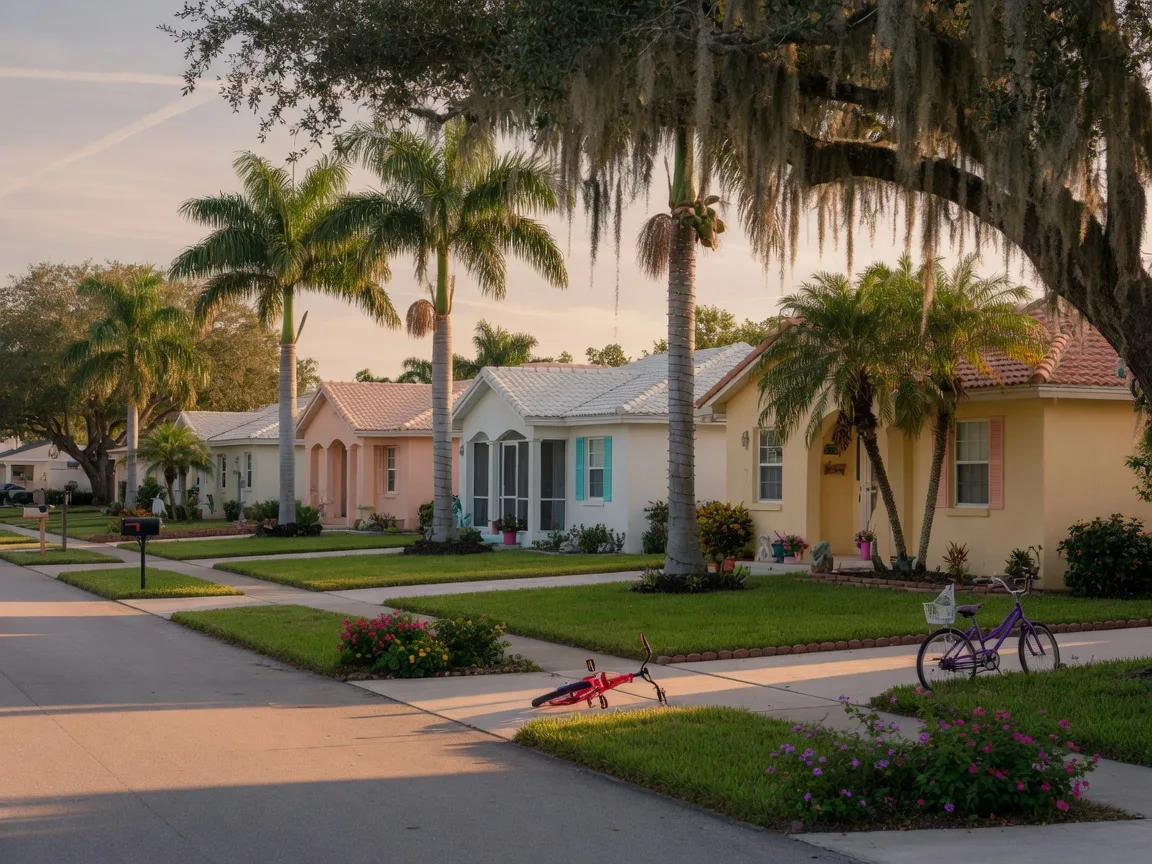
Quiet streets, warm light
“The point of this section is not a fake-precise number, because your household
is different from the next. When we talk about your budget, I walk you through the
real line items for the actual homes and ZIP codes you are considering.”
Ruth Rivera · Your Fearless Real Estate Resource
Pros and cons
The honest pros, and the practical cons.
No place is right for everyone at every moment, and Sarasota is no exception. Here are
the real strengths, and the things that ask a little planning, framed the practical way I
frame them for my own clients.
What Sarasota does well
The Gulf at your doorstep
Quartz-sand beaches on Siesta Key, sunsets over the Gulf from Lido and Longboat, boating and fishing on the bay: the water is part of everyday life, not a vacation you drive to.
A genuine arts and culture scene
The Ringling, the Sarasota Opera, Asolo Repertory Theatre, Florida Studio Theatre, and the Van Wezel keep a full cultural calendar, which is why the city is often called Florida's cultural capital.
Warm winters and friendly math
Mild, sunny winters, no state personal income tax, and a cost of living most indexes put roughly 4% to 8% above the U.S. average (PayScale, BestPlaces, and Salary.com, 2026), with housing doing the heavy lifting.
Built for every stage of life
From young professionals in downtown condos to growing families in Lakewood Ranch to active adults in Palmer Ranch, the county has a neighborhood rhythm for each chapter, with strong hospitals at the center of it all.
A stable, well-priced 2026 market
Sarasota County's single-family median held near $470,000 in August 2026 with 3.7 months of supply and inventory down about 21% year over year (RASM), a market that rewards prepared buyers and fairly priced sellers.
An airport that keeps growing
Sarasota Bradenton International (SRQ) has added nonstop routes in recent years, which matters for out-of-state buyers, second-home owners, and anyone who travels for work.
What to plan for
Summer heat and humidity
Real, and manageable. Efficient air conditioning, insulated windows, and tours planned for the cooler mornings make it easy; we check a home's AC age and efficiency on every visit, and the pool becomes part of your weather.
Seasonal traffic on the beach roads
Snowbird season, roughly January through April, plus holidays and spring break, brings extra cars to the islands and the main roads. Living on your corridor and timing beach runs outside peak hours keeps the daily rhythm easy.
Insurance and taxes vary by address
Same home, different ZIP: premiums and millage change block to block on the coast. We get real quotes and tax estimates for the actual address before you make an offer, so the numbers never surprise you at closing.
A car still matters outside the walkable core
Downtown and the village centers are walkable, and SCAT buses cover the county, but most daily life is car-based. Choosing a home near your job corridor keeps the drive short, and that is exactly what we plan together.
Hurricane season
A fact of Florida life, managed well: we check flood zones, roof age, and wind-mitigation features with every home, and most of the year Sarasota's weather is among the best in the country.
A specialized job market
Healthcare, education, hospitality, and professional services anchor the economy, which suits many careers beautifully. If your industry lives mostly in bigger metros, we plan the work first, and the airport plus a drive to Tampa keeps options open.
Relocator FAQ
Questions people ask before they move.
These are the questions relocators actually type into Google and AI tools when they are
weighing the move to Sarasota. Here are my direct answers, in my own voice, and every one
of them ends with the same open door.
Is Sarasota a good place to live?
For most relocators, deeply so. Sarasota is the Gulf Coast's cultural capital: a metro of about 948,000 people (U.S. Census Bureau, July 2025 estimate) built around quartz-sand beaches, a serious arts scene, and one of the mildest winters in the country. It draws everyone from young professionals to retirees, and almost every client I talk to finds a version of Sarasota that feels like home. Tell me what you want out of a place, and I will tell you honestly whether Sarasota is it.
Is Sarasota expensive?
Compared with the national average, moderately: the most-cited indexes put Sarasota roughly 4% to 8% above the U.S. average, with housing the main driver and utilities and groceries a little above too (PayScale, BestPlaces, and Salary.com, 2026). The balance is no state income tax and a wide range of neighborhoods and property types, from downtown condos to family suburbs. The sourced numbers are in the snapshot above, and I always build a personalized budget before anyone shops.
What are the best neighborhoods in Sarasota?
There is no single best neighborhood, only the best fit for your commute, budget, and the way you want to live. Downtown suits culture lovers and professionals, Siesta Key and Lido Key suit the beach set, Lakewood Ranch suits families, Palmer Ranch suits active adults and families, Southside Village suits walkers, Gulf Gate suits value-focused buyers, and University Park suits the hospital and UTC corridors. Tell me where you will work and how you want to live, and I will narrow it to two or three areas worth touring first.
How are the schools in Sarasota?
Sarasota County Schools serves roughly 44,000 to 45,000 students across about 57 to 65 school sites depending on the count and date (district materials and NCES, 2024-25), which the district describes as the 21st-largest system in Florida by enrollment. Buyers working or looking just north often consider Manatee County's district, about 52,000 to 54,000 students across roughly 82 schools, and Lakewood Ranch straddles the Sarasota and Manatee county line. The honest rule is the one I repeat everywhere: school assignments are address-specific and can change, so verify the exact address with the district before you make an offer, and I help with that every step.
Is Sarasota good for retirees?
For many, genuinely yes, and I say that as someone who works with clients at every stage of life. Mild winters, walkable villages, a full arts calendar, strong hospitals, and a long tradition of active-adult communities like Palmer Ranch make it a natural fit, and Florida's no-income-tax math helps stretched retirement budgets. Under the Fair Housing Act, every community is open to everyone, and I serve buyers of every age with the same care.
What is the weather like in Sarasota?
Warm most of the year: hot, humid summers with average July and August highs near 90 degrees and frequent afternoon storms, and mild, drier winters with January highs in the low 70s (NOAA 1991-2020 climate normals). The area averages roughly 54 to 56 inches of rain a year, most of it from June through September, and hurricane season runs June 1 through November 30, which is why we check flood zones and wind features on every home.
Is Sarasota safe?
The honest picture: the most recent FBI UCR data (2024) put the city of Sarasota's overall crime rate at about 2,165 per 100,000 residents, very close to the national average of about 2,119, while some sources note violent crime above the national norm. The encouraging trend is the direction: city police report that crime fell sharply three straight years, about 22% in 2024 and another 18% in 2025 (Sarasota Police Department data via local press). Safety varies block by block, so I help buyers look at the specific neighborhood, street, and building, not just the county line.
How far is Sarasota from the beach?
Sarasota sits right on the Gulf of Mexico, so the answer is usually a short drive. From downtown, Siesta Key is about 10 to 15 minutes and Lido Key with St. Armands Circle about the same; most central neighborhoods are within 20 minutes of a beach, while east-side communities like Lakewood Ranch typically run 25 to 35 minutes. If being near the beach is your priority, that becomes the very first filter we apply.
Is now a good time to buy or sell in Sarasota?
The August 2026 numbers tell a clear story: the single-family median held near $470,000, down 1.1% year over year, with 3.7 months of supply and active listings down about 21% (RASM, August 2026). That is a market with less overhang than last year, good news for sellers who price well and for buyers who move decisively on the right home. I will run the honest numbers for your situation, whether you are buying, selling, or doing both.
Do I need a car to live in Sarasota?
Practically speaking, yes: downtown and the village centers are walkable, and SCAT buses cover the county, but most daily life, from school runs to grocery trips, is car-based. The trick is choosing a home near your job corridor so the drive stays short, and for beach lovers, living between work and water. That is exactly the plan I build with every relocator.
Equal professional service
A fair chance at home in Sarasota, for everyone.
Ruth provides equal professional service to all clients, regardless of race, color,
religion, sex, disability, familial status, or national origin, and follows the
REALTOR® Code of Ethics and the Fair Housing Act. Every relocator gets the same
care, the same honesty, and the same protection, in English or Spanish.
Ready to find your Sarasota home?
Whether you are moving next month or exploring for next year, I would love to be your guide.
Start by searching homes, or send me a note and tell me about your move. I answer personally,
in English or Spanish, with no jargon and no obligation.